Build vs Buy vs Outsource
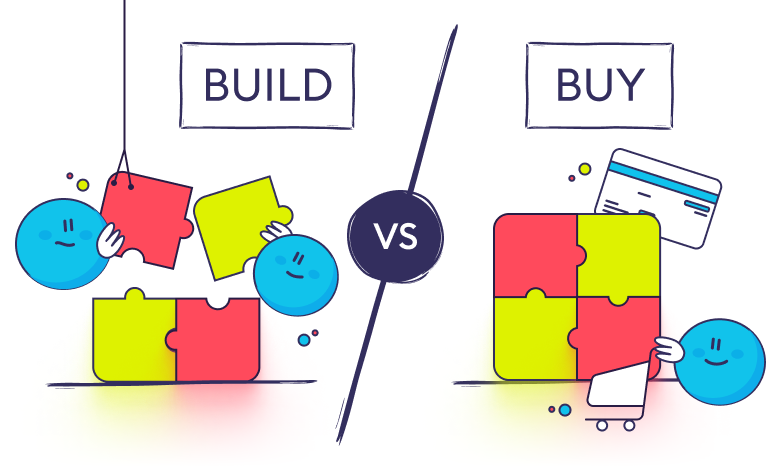
Facing the Build vs. Buy vs. Outsource dilemma? This consultant's framework helps you evaluate cost, control, and speed to make the right strategic choice for your software.
Build vs. Buy vs. Outsource: Your Framework for the Multi-Million Decision
It starts with a brilliant idea. A new feature that will wow customers, an internal tool to boost productivity, or a full-blown product to open a new market. Then comes the critical, and often paralyzing, question:
How do we actually get this software built?
Do we task our internal team? Buy an off-the-shelf solution? Or hire an external team to build it for us?
This isn’t just a technical choice; it’s a strategic business decision with multi-million implications for your budget, timeline, and competitive edge. Getting it wrong can mean wasted resources, technological dead-ends, and missed market opportunities.
As a software business consultant, I’ve guided countless companies through this exact crossroads. The right path isn’t about finding a one-size-fits-all answer; it’s about applying a disciplined framework to your unique situation.
Let’s break down the three options and then dive into the decision-making framework.
The Trinity of Options: A Quick Overview
1. Build (In-House)
This means using your own employees to design, develop, and maintain the software.
- 👍 The Upside: Maximum control, perfect alignment with your unique processes, and the intellectual property (IP) is entirely yours. It can become a core, defensible asset.
- 👎 The Downside: High initial cost (salaries, benefits), slow time-to-market, and the long-term burden of maintenance, updates, and security. You also need to manage hiring and team scalability.
2. Buy (COTS - Commercial Off-The-Shelf)
You purchase a license or subscription for an existing software product (e.g., Salesforce, SAP, Shopify, a niche SaaS tool).
- 👍 The Upside: Fastest implementation, predictable subscription-based costs, and the vendor handles maintenance, security, and updates. It’s often lower risk upfront.
- 👎 The Downside: Limited customization, you’re stuck with the vendor’s roadmap, and you may have to change your business processes to fit the software. You also create a dependency on a third party.
3. Outsource
You hire an external agency or team of contractors to build the software for you.
- 👍 The Upside: Access to a global talent pool and specialized skills without long-term hiring. Faster than building a team from scratch and often more cost-effective than in-house for short-term projects. You retain the IP.
- 👎 The Downside: Requires excellent communication and project management. Potential for quality issues if the partner is not vetted properly. Less direct control over the day-to-day development process.
The Decision Framework: 4 Key Questions to Ask
Forget gut feelings. Evaluate your project against these four pillars to find your optimal path.
1. Is it a Core Competitive Advantage?
- The Question: Is this software what truly differentiates you in the market? Is it your “secret sauce”?
- The Guidance:
- YES (Core): Heavily lean towards Build or Outsource. You must control this asset completely. Building in-house protects your IP most securely, while a trusted outsourcing partner can accelerate development.
- NO (Commodity): Heavily lean towards Buy. Don’t waste resources building a generic CRM, accounting system, or email marketing tool. Focus your innovation on what makes you unique.
2. What is Your Real Timeline?
- The Question: How critical is speed-to-market for this initiative?
- The Guidance:
- URGENT (Weeks/Months): Buy is the fastest way to get a solution running. Outsourcing can also be rapid if you find the right partner.
- STRATEGIC (6+ Months): Build becomes a viable option, allowing you to create a perfectly tailored solution over time.
3. What are the Total Costs (Not Just the Price Tag)?
- The Question: Have you looked beyond the initial investment?
- The Guidance:
- Build: High initial cost (salaries), plus ongoing, often hidden, costs of maintenance, upgrades, and hosting (Total Cost of Ownership - TCO).
- Buy: Predictable, lower initial cost (subscription fee), but can become expensive at scale and may involve integration costs.
- Outsource: Mid-range initial cost (project fee), with potential for lower long-term maintenance costs if the code is well-documented and handed over properly.
4. How Unique are Your Requirements?
- The Question: Can an existing product satisfy 80%+ of your needs, or are your processes completely unique?
- The Guidance:
- STANDARD NEEDS: If a COTS product covers most of your requirements, Buy. Adapting your process slightly is often cheaper and faster than building from scratch.
- HIGHLY CUSTOM NEEDS: If your requirements are complex and unique, forcing a square peg (COTS) into a round hole (your process) will fail. Build or Outsource is the only path.
Bringing It All Together: A Simple Scoring Matrix
| Your Project’s Characteristic | Leans Towards… |
|---|---|
| Core to your business | Build / Outsource |
| Generic / Commoditized | Buy |
| Need it yesterday | Buy / Outsource |
| Long-term strategic project | Build |
| Limited budget & resources | Buy |
| Highly unique requirements | Build / Outsource |
| Need specialized, short-term skills | Outsource |
The Consultant’s Bottom Line
There is no universally “right” answer, only the right answer for you, right now. The most successful companies often use a hybrid approach:
- BUY for standard operational needs (HR, CRM, accounting).
- BUILD for their core, proprietary technology that defines their market position.
- OUTSOURCE for specific projects that require niche expertise or to augment their internal team during peak periods.
The goal of this framework is to replace anxiety with clarity. By objectively assessing your project against these criteria, you can move forward with confidence, knowing your decision is grounded in strategy, not just speculation.
Struggling to apply this framework to your specific challenge?
You don’t have to make this multi-million/naira decision alone. I help business leaders cut through the complexity and build a technology strategy that aligns with their core business goals.
Schedule a complimentary 30-minute strategy session with me to analyze your project and identify the best path forward